

For homeowners and business owners across Illinois, plumbing systems are essential to daily comfort and functionality. From clean running water to properly functioning drains, your plumbing system quietly supports everything from morning showers to industrial operations. However, when pipes burst, fixtures leak, or water pressure drops, you’re suddenly faced with a crucial question: Should you repair or replace your plumbing system?
At Cardinal Plumbing Co., we’ve guided countless Illinois residents through this decision. Our expert plumbing replacement guidelines help you understand when a quick repair is enough and when a full system upgrade makes better financial and functional sense. This article provides a complete breakdown of how to make smart plumbing choices, including cost considerations, warning signs, and the long-term benefits of investing in your system’s health. Follow us on our Facebook Page to learn more information and stay with us.
Understanding the Importance of Smart Plumbing Decisions
Every home or business in Illinois eventually faces plumbing wear and tear. Age, water quality, and daily use can all impact the lifespan of pipes, fixtures, and water heaters. Making the wrong decision-whether repairing when replacement is needed, or vice versa can lead to wasted money and recurring headaches. That’s why plumbing upgrade guidelines are critical for every property owner. Following these standards ensures your plumbing system stays safe, efficient, and cost-effective. By learning how to assess your system’s condition, you’ll be prepared to make confident decisions that protect your investment.
Key Factors to Consider Before Choosing Repair or Replacement

1. Age of Your Plumbing System
The age of your plumbing is one of the strongest indicators of its health. Galvanized steel pipes, for example, have an average lifespan of 40-50 years, while copper and PEX pipes can last much longer with proper care. If your home or building was constructed decades ago and still has its original plumbing, replacement might be inevitable. According to our plumbing upgrade guidelines, older systems not only why risk leaks detection important but can also contaminate water with rust or corrosion.
2. Frequency of Repairs
One minor repair isn’t a big deal, but frequent plumbing issues such as leaks, clogs, or pressure problems indicate a deeper problem. Continuous patchwork solutions can end up costing more in the long run than a complete upgrade. If you’ve had to call a plumber multiple times in the past year, plumbing upgrade guidelines suggest that investing in a long-term solution could save you significant money.
3. Water Quality Issues
If your water has started to smell metallic, appear cloudy, or leave mineral buildup on fixtures, your plumbing may be corroding internally. In Illinois, where hard water is common, corrosion and sediment buildup can cause premature pipe wear. Replacing corroded pipes or installing a water filtration system can dramatically improve water quality and prevent health risks.
4. Water Pressure Changes
Low or inconsistent water pressure often points to a hidden leak or blockage. While minor clogs can be cleared, persistent pressure problems usually suggest pipe deterioration. Following plumbing replacement guidelines ensures that these problems are addressed comprehensively, not temporarily.
5. Visible Signs of Damage
Rusty spots, discolored water, or damp drywall can all indicate hidden leaks. These visible warning signs should not be ignored. If multiple areas of your plumbing system show deterioration, a replacement may be the only safe and sustainable fix.
How to Assess Your Plumbing System’s Condition
Understanding your plumbing’s health requires more than a visual check. Regular professional plumbing inspections important play a vital role in determining whether to repair or replace your system. At Cardinal Plumbing Co., our licensed plumbers perform detailed inspections using advanced diagnostic tools like video pipe cameras and pressure gauges. Our plumbing upgrade guidelines recommend scheduling these inspections annually to identify issues before they cause costly water damage. During an inspection, a professional will check pipe integrity and corrosion levels, water pressure consistency, drainage performance, signs of hidden leaks, and fixture functionality. By understanding the current state of your plumbing, you can make informed decisions about repairs or replacements with confidence.
Plumbing Materials: What’s Inside Your System Matters
The material of your pipes determines how long they’ll last and how they perform over time. Here’s how the most common plumbing materials compare under Illinois conditions: galvanized steel is prone to rust and corrosion over decades; copper is durable and corrosion-resistant but more expensive; PEX is flexible, affordable, and ideal for modern installations; and PVC is commonly used for drain lines but not suitable for hot water. If your system relies on outdated materials, upgrading can increase efficiency and improve water quality. Plumbing replacement guidelines emphasize that the right materials contribute to longer-lasting, lower-maintenance systems.
Long-Term Cost Benefits of Plumbing Replacement
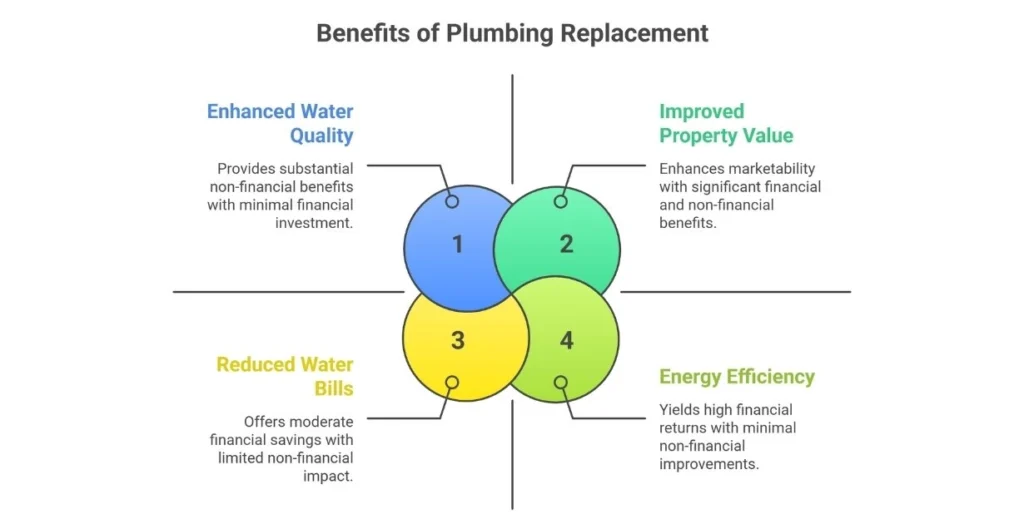
Preventive Maintenance: Extending the Life of Your Plumbing
Before a full replacement becomes necessary, regular maintenance can extend the life of your system. Here are the most effective strategies based on plumbing upgrade guidelines: regular inspections to catch small leaks early, drain cleaning to prevent backups, water pressure checks to avoid pipe stress, water softening to reduce mineral buildup, and annual water heater flushing to remove sediment. Routine care not only improves reliability but also helps you plan ahead for replacements rather than facing sudden emergencies.
Environmental Benefits of Updated Plumbing Systems

Common Mistakes Homeowners Make
Many property owners hesitate to replace their plumbing because repairs seem cheaper in the moment. However, these short-term fixes often cost more in the long run. Here are a few mistakes our team at Cardinal Plumbing Co. sees frequently: ignoring early warning signs like discolored water or low pressure, overusing chemical drain cleaners that damage pipes, attempting DIY repairs without professional guidance, and failing to follow plumbing replacement guidelines during upgrades. Avoiding these errors ensures your system remains efficient, safe, and compliant with plumbing health protection to lean this.
The Role of Professional Assessment
Determining when to repair or replace plumbing isn’t always straightforward. That’s why expert evaluation is key. Cardinal Plumbing Co. offers comprehensive diagnostics designed to identify not only existing problems but potential future issues. Our plumbing upgrade guidelines involve evaluating pipe material and age, testing water pressure and flow, checking for corrosion or scale buildup, reviewing repair history, and providing transparent repair vs. replacement cost comparisons. With this data, our licensed technicians help homeowners and business owners make informed, budget-friendly decisions.
Planning Your Plumbing Replacement Project
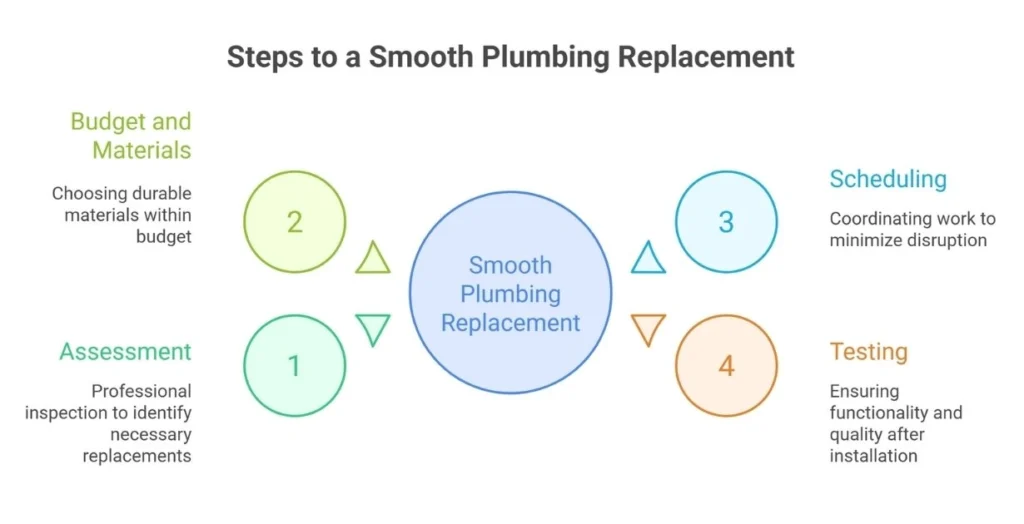
Advanced Plumbing Innovations Worth Considering
Modern plumbing technology has made systems more efficient, durable, and eco-friendly. When planning a replacement, consider these upgrades: smart leak detectors that monitor your plumbing system remotely, tankless water heaters for energy savings, greywater recycling systems for sustainable reuse, and touchless fixtures for hygiene and water efficiency. Incorporating these features not only boosts property value but also aligns with future-focused plumbing replacement guidelines.
The Illinois Perspective: Why Local Expertise Matters
Plumbing systems in Illinois face unique challenges hard water, freezing winters, and fluctuating temperatures can strain even the best installations. Choosing a local expert like Cardinal Plumbing Co. ensures that your system is designed with regional conditions in mind. Our team follows Illinois-specific plumbing upgrade guidelines, including code compliance, material recommendations, and preventive strategies suited to local water chemistry. With years of experience serving both homes and businesses, we know what works best in our area.
Final Thoughts
Knowing when to repair or replace your plumbing system is crucial for protecting your home or business. By following expert plumbing replacement guidelines, you can make smart, long-term decisions that save money, improve water quality, and boost efficiency. Whether you’re dealing with aging pipes, inconsistent water pressure, or outdated materials, Cardinal Plumbing Co. is here to contact us today.
Our licensed technicians provide honest assessments, expert craftsmanship, and solutions tailored to Illinois properties. For dependable plumbing repairs, full system replacements, or preventive maintenance, trust Cardinal Plumbing Co. to keep your water flowing safely and efficiently today and for years to come.
Frequently Asked Questions About Plumbing Replacement Guidelines
How often should plumbing be replaced?
Depends on material: Galvanized Steel (20–50 yrs), Copper (50–70 yrs), PVC/PEX (40–100+ yrs). Replace if there are frequent leaks or rusty water.
What is the 135 rule in plumbing?
A guideline for long sewer mains. It suggests installing an intermediate cleanout (access point for clearing clogs) if the main pipe run is longer than 135 feet.
What is SOP in plumbing?
Standard Operating Procedure. A detailed, step-by-step set of instructions to ensure all tasks (installation, repair, safety) are performed consistently and to code.
What is a 2% slope for drainage?
The minimum required pitch for drainage is typically $1/4$ inch drop per foot of run. This equates to a $\approx 2.08\%$ slope. It’s necessary to move solids with the water and prevent clogs.
What is the Principle 5 of plumbing?
A common principle (based on the Revised National Plumbing Code) is that any building on a street with a public sewer must connect its fixtures to the sewer system.